CNC manufacturing is entering 2026 with faster machines, smarter software, and tighter production demands. Manufacturers now expect equipment to improve accuracy, reduce waste, and respond quickly to changing orders. Yet technology alone cannot solve every workshop problem. Skilled operators still matter.
So, what are the latest trends in cnc technology? This article examines the developments shaping modern machining, including artificial intelligence, digital twins, connected factories, and collaborative robots. It also considers multi-axis machining, hybrid additive manufacturing, automated inspection, and energy-efficient equipment. These trends are already visible on factory floors. A sensor can detect spindle vibration before a cutting tool fails. A digital twin can test a toolpath before metal reaches the machine.
The evidence is practical, not purely promotional. Engineers compare cycle times, surface quality, downtime, maintenance records, and energy use before approving new systems. However, adoption remains uneven. A small workshop may benefit more from predictive maintenance than an expensive autonomous cell. That distinction is often ignored. Cybersecurity, data quality, operator training, and integration costs also deserve serious attention.
Some predictions will age badly. That is normal in a rapidly changing industry. Reliable decisions require measured results, supplier transparency, and trials under real production conditions. This guide explores where CNC technology is heading, what benefits appear realistic, and which claims require closer examination. The goal is not to celebrate every new feature. It is to help manufacturers choose useful improvements with greater confidence.
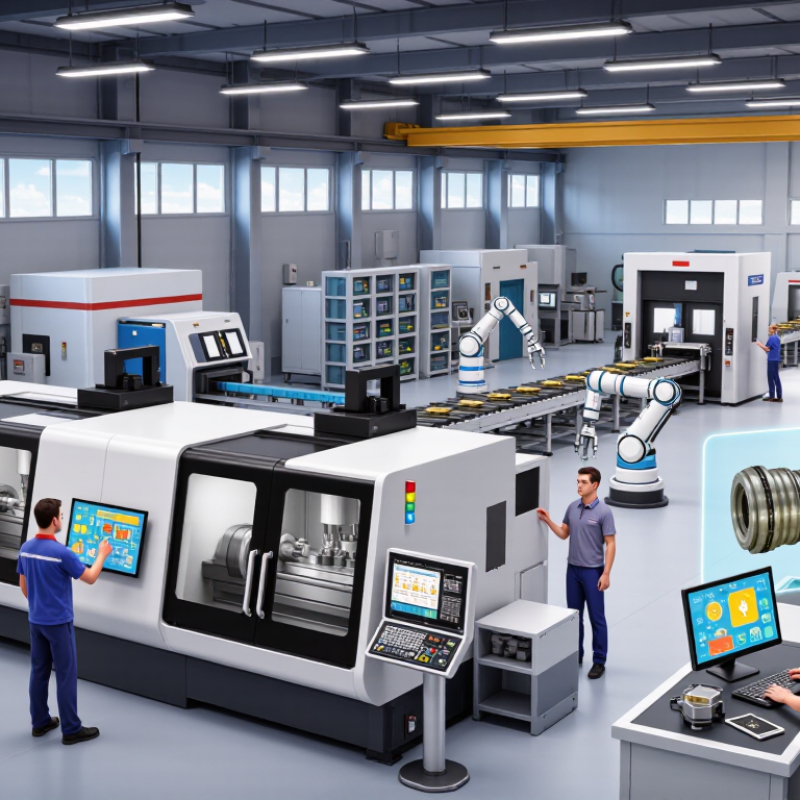
CNC technology in 2026 means more than computer-controlled cutting. It combines programmed motion, sensors, software, robotics, and real-time production data. A modern CNC cell can adjust feed rates when vibration rises or tool wear changes. It can also record spindle load, temperature, cycle time, and surface quality. These details make machining more measurable and easier to improve.
The scope now reaches aerospace, medical equipment, energy systems, automotive parts, and small-batch workshops. Digital twins help engineers test toolpaths before metal is cut. Artificial intelligence can detect unusual cutting patterns, although its recommendations still need skilled human review. Automated loading reduces repetitive handling. Adaptive control can protect fragile tools during deep pockets or thin-wall machining. Small mistakes remain possible.
Industrial importance is clear on the shop floor. A damaged tool may ruin several expensive parts before inspection notices the defect. Connected monitoring can warn operators earlier. Energy tracking can reveal when a machine consumes power without producing useful work. Cybersecurity is also part of CNC reliability because connected equipment carries production data and operating commands. In practice, installation is not always smooth. Older machines may lack sensors, and poor data quality can weaken advanced software. Skilled programmers and maintenance technicians remain essential for safe decisions, accurate tolerances, and dependable output.
AI-driven CNC systems are changing how machining decisions are made. Instead of using fixed feed rates, controllers read spindle load, vibration, acoustic signals, and coolant temperature. They then adjust cutting conditions during production. A sudden rise in spindle torque may trigger a slower feed before chatter damages the surface. This is adaptive process control in practical terms.
Deloitte’s 2024 Smart Manufacturing and Operations Survey reported that 86% of manufacturers viewed smart manufacturing as important for competitiveness within three years. The International Federation of Robotics recorded 541,302 industrial robot installations worldwide in 2023, a 4% annual increase. These figures show stronger automation demand, but CNC intelligence still depends on clean production data. A dusty sensor can produce confident yet incorrect decisions.
The most useful systems combine machine learning with physical machining models. They compare predicted tool wear against real cutting behavior, then refine the next operation. On a shop floor, this can mean holding a tighter tolerance across hundreds of aluminum parts without constant manual correction. Less scrap. More stability.
Yet AI is not automatically reliable. It may confuse a fixture vibration with tool failure, especially during unusual setups. Operators still need to review alarms, inspect first-off parts, and question abnormal recommendations. That human feedback improves the control model over time. I would not allow fully autonomous parameter changes on critical parts without documented limits, traceable data, and a manual override. Mistakes remain possible.
AI-Driven CNC Systems and Adaptive Process Control
This representative 60-second CNC machining cycle shows how adaptive control can reduce feed rate when spindle load rises, then restore productivity as cutting conditions stabilize. Feed rate is measured in millimeters per minute, while spindle load is shown as a percentage of rated spindle capacity.
In 2026, CNC workshops are treating digital twins as working tools, not showroom software. A twin mirrors spindle load, tool wear, temperature, and cycle time from the shop floor. Engineers can test a revised feed rate virtually before cutting steel. That reduces scrap during difficult five-axis jobs. It also exposes uncomfortable assumptions. A simulation may look accurate while missing vibration from a worn fixture.
Connected machines now stream operating data through controlled industrial networks. Operators can compare energy use, alarms, and surface-finish results across shifts. A tablet might show that a coolant temperature rise began 40 minutes before dimensional drift. This creates faster decisions, but connectivity needs discipline. Access permissions, data validation, and offline procedures remain essential when signals fail. Real experience still beats a perfect dashboard. Sometimes the sensor lies.
Predictive maintenance becomes more practical when models combine sensor readings with maintenance history. A rising spindle vibration pattern can trigger an inspection before bearing damage stops production. The best systems recommend a specific action, such as checking lubrication or measuring runout. They do not simply flash a warning. Yet false alarms remain common, especially with limited historical data. Teams should review every prediction and record what actually happened. That feedback improves reliability, though not overnight.
| Technology Trend | Core Capability | Key Data Inputs | Typical 2026 Performance Indicator | Primary Manufacturing Value | Implementation Considerations | Relevant Technical Basis |
|---|---|---|---|---|---|---|
| Digital Twins | A virtual representation of a CNC machine, process, tool, or production cell that is synchronized with operational data. | NC programs, machine states, axis positions, spindle load, tool data, alarms, quality results, and production schedules. | Near-real-time visualization, virtual process validation, and earlier detection of deviations before physical production is affected. | Reduced setup risk, fewer virtual-to-physical discrepancies, and improved process planning. | Requires accurate machine models, consistent asset identifiers, synchronized timestamps, and validated process data. | ISO 23247 digital-twin framework for manufacturing. |
| Connected CNC Machines | Secure exchange of machine, production, quality, and maintenance information across shop-floor and enterprise systems. | Machine status, cycle time, part counts, alarms, energy readings, program identifiers, and operator events. | Higher data availability with standardized machine-to-system communication and fewer manual production records. | Improved production visibility, faster response to downtime, and more reliable operational reporting. | Legacy equipment may need gateways; cybersecurity, network segmentation, access control, and data ownership are essential. | OPC UA, MTConnect, MQTT, and industrial Ethernet are commonly used connectivity foundations. |
| Predictive Maintenance | Uses condition data and analytical models to identify developing faults before functional failure. | Vibration, motor current, temperature, acoustic signals, spindle load, lubrication condition, alarms, and maintenance history. | Health scores, anomaly alerts, estimated fault progression, and maintenance recommendations based on asset condition. | More planned maintenance, fewer unexpected stoppages, and better spare-parts scheduling. | Requires failure-history data, stable sensor placement, clear alert thresholds, and technician validation of model results. | ISO 13374 condition-monitoring data processing and presentation guidance. |
| Edge Analytics and AI | Processes machine data close to the equipment to support rapid detection, classification, and control decisions. | High-frequency sensor signals, spindle behavior, cutting-force patterns, tool wear indicators, and process images. | Low-latency alerts, automated anomaly classification, and reduced dependence on continuous cloud connectivity. | Faster reaction to tool breakage, chatter, overload, and quality deviations. | Models must be monitored for false alarms, data drift, changing materials, and different cutting conditions. | Industrial edge-computing architectures and machine-learning model governance practices. |
| Tool-Life and Process Monitoring | Tracks tool condition and cutting behavior to optimize tool changes and protect part quality. | Cutting time, spindle load, torque, vibration, acoustic emission, tool offset history, and inspection results. | Condition-based tool replacement instead of relying only on fixed tool-change intervals. | Lower risk of tool breakage, reduced scrap, and improved consistency across production batches. | Models must account for material variation, cutting parameters, tool geometry, coolant condition, and workholding. | Statistical process control, condition monitoring, and closed-loop manufacturing practices. |
| Energy and Carbon Monitoring | Measures energy consumption at machine or process level and relates it to parts, cycles, and production conditions. | Electricity use, spindle load, idle time, cycle time, material throughput, and production quantity. | Energy-per-part dashboards, idle-energy identification, and comparisons between process plans. | Supports energy reduction, production-cost analysis, and environmental reporting. | Meter accuracy, allocation rules, operating-mode definitions, and consistent production denominators are required. | ISO 50001 energy-management principles and ISO 14955 machine-tool energy-efficiency guidance. |
| Cybersecurity by Design | Protects connected CNC assets, production data, control networks, and remote-access pathways from disruption or unauthorized use. | User identities, network events, software versions, access logs, configuration changes, and security alerts. | Segmented networks, controlled remote access, authenticated devices, backup procedures, and documented incident response. | Improved operational resilience and safer expansion of connected manufacturing systems. | Security controls must be maintained throughout the machine life cycle without interrupting production. | IEC 62443 industrial automation and control-system cybersecurity principles. |
In 2026, CNC production is moving toward connected cells where automation supports, rather than replaces, skilled operators. Robotic arms now load raw stock, remove finished parts, and adjust handling when sensors detect variation.
Machine vision checks tool position, surface defects, and part orientation before the next operation begins. This reduces repetitive work and limits unnecessary lifting. Human judgment still matters. A sensor can flag chatter, but an experienced machinist can recognize its changing sound. Adaptive machining and predictive maintenance also help systems respond to tool wear before quality declines.
Tips: Start with one repetitive task, such as pallet loading. Record cycle time, error rates, and operator feedback for several weeks. Train workers to review alerts, override unsafe movements, and verify first-off parts. Do not automate a process that nobody understands.
Collaborative robots are becoming more practical for smaller batches, especially when quick changeovers are required. Operators can guide a robot through a new sequence, then refine speed, reach, and safety limits. Digital work instructions can display setup steps beside the machine, reducing memory-based mistakes.
Yet integration is not always smooth. Poor sensor placement creates false alarms, while incomplete data can encourage confident but wrong adjustments. Early trials may expose weaknesses in training or workflow design. That is useful, though uncomfortable. Reliable deployment requires documented procedures, regular calibration, and clear responsibility for every decision.
In 2026, CNC progress is moving from faster cutting toward cleaner, safer, and more measurable production. Energy meters at each machine can expose idle loads, compressed-air leaks, and inefficient tool paths. Operators can compare kilowatt-hours per finished part, not just spindle speed. That detail matters when a short cycle still consumes hours of standby power. Adaptive control can adjust feed rates as cutting forces change. It reduces scrap and tool wear, although poor sensor calibration can create false confidence. The process needs human review.
Sustainable practice also reaches coolant and material handling. High-pressure filtration extends fluid life, while minimum-quantity lubrication can reduce waste for suitable alloys and operations. Separated chips retain more value when they leave the machine clean and dry. Remanufacturing worn fixtures and using predictive maintenance can prevent unnecessary replacements. A practical audit should record coolant concentration, rejected parts, maintenance hours, and energy use each week. Numbers reveal uncomfortable gaps. Some “green” upgrades may shift environmental costs elsewhere, so suppliers and disposal routes need verification.
Security is now part of machining quality. Network segmentation can isolate controllers from office systems, while multifactor access can limit unauthorized changes. Signed software updates, offline backups, and tamper-resistant logs support traceability during audits. Digital twins and simulation help test collision risks before metal is cut. Machine-vision checks can catch burrs or missing features. Yet automation is not self-correcting. An incorrect model can repeat the same defect across hundreds of parts. Skilled staff should validate programs, review alerts, and retain override authority. That balance is difficult.
They monitor spindle load, vibration, acoustic signals, and coolant temperature. A torque spike may reduce feed speed before surface damage appears.
Sensors guide control decisions. Dust, poor calibration, or loose mounting can create confident but incorrect adjustments. Sometimes the sensor lies.
No. They may mistake fixture vibration for tool failure. Operators should inspect first-off parts and review unusual recommendations.
It mirrors tool wear, spindle load, temperature, and cycle time. Engineers can test feed changes virtually before cutting steel.
They compare alarms, energy use, and finish results across shifts. A temperature rise may appear before dimensional drift.
Models study sensor readings and maintenance history. Rising spindle vibration may prompt lubrication checks or runout measurements before a breakdown.
Robots can load raw stock, remove finished parts, and check orientation. This reduces repetitive lifting and handling work.
No. Start with one repetitive task, such as pallet loading. Measure cycle time, errors, and operator feedback for several weeks.
Skilled workers review alerts, verify first-off parts, and override unsafe movements. Experience still catches changing chatter sounds.
Use documented limits, calibrated sensors, controlled access, and offline procedures. My confidence would remain limited without traceable feedback.
In 2026, CNC technology is evolving from conventional computer-controlled machining into an intelligent, connected, and highly adaptive manufacturing system. If you ask, “what are the latest trends in cnc technology,” the answer includes AI-driven process control, real-time production analysis, and machines that can adjust cutting conditions based on material behavior, tool wear, and changing workloads. These developments improve precision, productivity, and consistency while reducing setup errors and unnecessary material use.
Digital twins and connected machines are also making it easier to monitor equipment, simulate operations, and predict maintenance needs before failures occur. At the same time, robotics and automated handling are supporting safer, more flexible production, while human-machine collaboration allows skilled workers to focus on planning, quality, and problem-solving. Future CNC manufacturing will also emphasize energy efficiency, secure data communication, responsible resource use, and advanced machining strategies that support reliable, sustainable, and competitive industrial operations.

MecMill Precision