What Industries Use CNC Machining Services in 2026?

Time:2026-09-15 Author:Oliver
0%

In 2026, CNC machining remains a practical foundation for industries that demand accurate, repeatable, and traceable parts. From aerospace brackets to medical instrument housings, manufacturers rely on controlled cutting, milling, turning, and multi-axis production. The question is not simply what industries use cnc machining services. It is also how each sector applies them, verifies quality, and manages production risk.

Automotive companies use CNC services for engine components, prototypes, fixtures, and lightweight structural parts. Aerospace manufacturers require tight tolerances, documented materials, and inspection records for critical components. Medical device producers often need clean, precise parts made from stainless steel, titanium, or engineering plastics. Energy, robotics, electronics, defense, and industrial equipment companies also use CNC machining when standard parts cannot meet their design requirements.

Precision still matters. However, CNC machining is not automatically the best solution for every component. High tooling costs, complex programming, material waste, and long inspection cycles can affect the final decision. Real procurement choices are messier. A production engineer may select CNC machining for ten prototypes, then switch to casting or injection molding for thousands of units. Experienced suppliers examine tolerance needs, surface finish, batch size, material behavior, and delivery expectations before recommending a process. No list is perfect. This guide compares the major industries, practical applications, and quality considerations shaping CNC machining services in 2026, while recognizing that technology and manufacturing priorities continue to change.
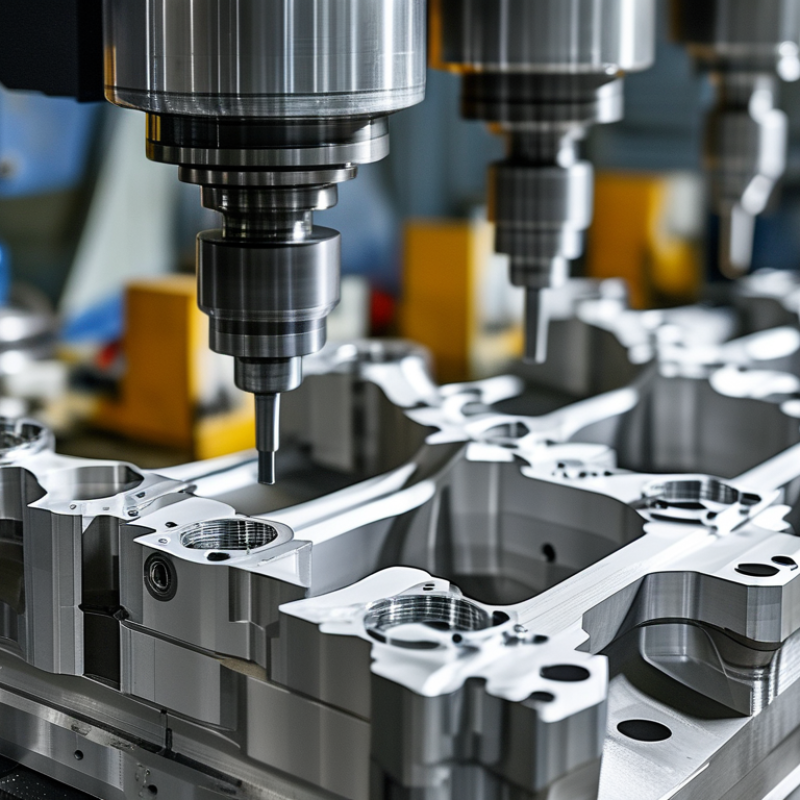
What Industries Use CNC Machining Services in 2026?

CNC Machining Services: Definition, Processes, and Industrial Role

What Industries Use CNC Machining Services in 2026?

CNC Machining Services: Definition, Processes, and Industrial Role

CNC machining uses computer-controlled tools to remove material from metal, plastic, or composites. A digital CAD model guides cutting paths, speeds, and tool changes. Common processes include milling, turning, drilling, grinding, and five-axis cutting. On a shop floor, the process may begin with a billet, a vise, coolant, and a calibrated probe. Inspection then checks dimensions against engineering drawings.

Aerospace, medical equipment, automotive, energy, and electronics companies rely on these services. They need repeatable parts, tight tolerances, and traceable inspection records. The International Federation of Robotics reported 4.28 million industrial robots operating worldwide in 2023, a 10% annual increase. CNC systems often work beside these robots for loading, unloading, and in-process measurement. That matters.

Market demand is also expanding. Grand View Research estimated the global CNC machine market at more than 80 billion dollars in 2023, with annual growth above 6% expected through 2030. The U.S. Bureau of Labor Statistics projects about 37,900 annual openings for machinists and tool-and-die makers during 2023–2033, despite modest employment decline. Automation changes the work, but it does not remove judgment. A rushed setup can ruin an expensive alloy within minutes. Tool wear, thermal growth, and imperfect drawings still create problems. CNC machining is precise, not infallible.

Aerospace, Defense, and Spacecraft Manufacturing Applications

CNC machining plays a vital role in aerospace, defense, and spacecraft manufacturing. These industries demand accurate parts, stable materials, and dependable inspection records.

Aerospace manufacturers use CNC equipment for structural brackets, landing gear components, engine mounts, and cabin fittings. Five-axis machining can produce complex shapes with fewer setups. This reduces alignment errors and protects tight positional tolerances. Aluminum alloys keep aircraft parts lightweight, while titanium supports high strength near demanding heat zones. Engineers often measure finished parts with coordinate measuring machines and digital inspection reports. Traceability matters. Every batch needs clear material records, process notes, and operator checks.

Defense manufacturers apply CNC machining to rugged equipment housings, communication-system mounts, vehicle components, and protective covers. These parts may face vibration, dust, moisture, and repeated temperature changes. Machinists therefore control surface finish, wall thickness, and fastener alignment carefully. Spacecraft manufacturing adds stricter concerns. Satellite brackets, sensor mounts, thermal-control parts, and launch-vehicle interfaces must survive intense vibration and extreme temperature shifts. Clean handling is essential for flight hardware.

CNC is not a magic solution. A perfect drawing can still create a difficult part. Thin walls may distort during cutting, and unusual materials can increase tool wear. Engineers sometimes revise fixtures, cutting paths, or inspection points after early trials. That practical feedback improves reliability, although it can extend production time. Experienced teams balance precision, manufacturability, documentation, and realistic delivery schedules.

The 2026 CNC machining application index compares the relative need for high-precision machining across aerospace, defense, and spacecraft manufacturing. The index reflects typical part complexity, material difficulty, dimensional accuracy, and production requirements; it is a planning benchmark rather than a company-reported market share.

Automotive, Electric Vehicle, and Transportation Industry Uses

CNC machining services support automotive, electric vehicle, and transportation manufacturers where accuracy affects safety and assembly. Production teams use machined aluminum housings, steel shafts, brake components, suspension brackets, and battery enclosures. These parts often begin as prototypes, then move into repeatable production after engineers verify fit, strength, and heat behavior. Small deviations matter. A poorly aligned shaft can create vibration, noise, and premature wear.

In electric vehicles, machining helps produce motor mounts, reduction-gear parts, cooling plates, charging connectors, and structural interfaces. CNC mills and lathes hold tight tolerances around bearing seats and sealing surfaces. That control supports efficient power transfer and reduces fluid or coolant leakage. However, machining alone does not guarantee reliability. Material selection, tool wear, inspection methods, and operator judgment remain important. A clean-looking part can still fail when a hidden burr disturbs assembly.

Transportation suppliers also machine rail fittings, bus components, steering parts, and lightweight cabin structures. For low-volume models or replacement parts, CNC production avoids expensive dedicated tooling. Digital drawings can become inspected components within days, depending on complexity and material. Still, faster is not always better. Rushed programming or incomplete drawings may create scrap, delays, or unsafe fitment. Manufacturers should document tolerances, trace materials, inspect critical dimensions, and review results before scaling production. Some projects still expose weak assumptions.

Medical, Dental, and Healthcare Equipment Production

Medical, Dental, and Healthcare Equipment Production

In 2026, CNC machining remains important for producing precise medical, dental, and healthcare equipment. Manufacturers use it for surgical instrument parts, diagnostic housings, dental handpiece components, and small fluid-control fittings. These parts often require tight tolerances, smooth surfaces, and consistent dimensions across many production batches. Stainless steel, titanium, aluminum, and selected engineering plastics are common materials. Each material behaves differently during cutting.

In practical production, quality begins before the machine starts. Engineers review drawings, tolerances, surface finishes, and cleaning requirements together. A tiny burr inside a dental component can affect assembly or hygiene. Poor chip control may also damage a narrow channel. Inspection records, material traceability, and process validation help reduce these risks. Still, a polished part is not automatically ready for clinical use. I have seen projects require rework because a beautiful surface concealed an unsuitable internal corner. That detail deserves more attention.

Tips: Ask for inspection evidence, not only a quality statement. Confirm how critical dimensions are measured and recorded. Discuss sterilization, cleaning, and packaging conditions early. For dental parts, check tool access around small cavities and angled features. For healthcare housings, consider cable paths, ventilation, and repeated disinfection. Leave room for design review. Some drawings look complete but omit practical machining limits. Feedback from machinists and quality engineers can expose those gaps before expensive tooling or production begins.

What Industries Use CNC Machining Services in 2026? - Medical, Dental, and Healthcare Equipment Production

Common CNC machining applications across medical, dental, and healthcare equipment manufacturing
Industry Segment Typical CNC Parts Common Materials Typical Machining Requirements Typical Dimensional Tolerance Common Surface or Post-Processing Key Quality Considerations
Orthopedic Medical Devices Bone plates, fixation components, trial instruments, joint replacement tooling Titanium alloys, cobalt-chromium alloys, stainless steel, PEEK Multi-axis milling, turning, thread machining, complex contouring Approximately ±0.01–0.05 mm, depending on the feature and material Passivation, electropolishing, anodizing, polishing, ultrasonic cleaning Traceability, burr control, biocompatibility documentation, controlled cleanliness
Surgical Instruments Retractors, clamps, forceps components, drill guides, surgical handles Stainless steel, titanium, aluminum, PEEK, engineering plastics CNC milling and turning with fine edge, hole, and grip features Approximately ±0.02–0.05 mm for many functional features Electropolishing, passivation, bead blasting, laser marking Smooth surfaces, corrosion resistance, sterilization compatibility, identification marking
Dental Equipment and Instruments Handpiece housings, implant drivers, abutment components, laboratory fixtures Titanium, cobalt-chromium alloys, stainless steel, aluminum, PEEK Precision turning, small-part milling, internal threading, fine-hole machining Approximately ±0.005–0.03 mm for critical mating or interface features Polishing, passivation, anodizing, cleaning, sterilization preparation Dimensional repeatability, low runout, smooth internal passages, lot traceability
Dental Prosthetics and Implant Components Implant interfaces, scan bodies, custom abutments, milling fixtures Titanium alloys, cobalt-chromium alloys, zirconia blanks, PEEK High-speed milling, precision turning, thread and interface machining Approximately ±0.005–0.02 mm for implant-interface features Polishing, cleaning, sintering when applicable, surface treatment specified by design Implant-interface accuracy, surface integrity, material certification, contamination control
Diagnostic and Laboratory Equipment Sample holders, analyzer frames, probe mounts, fluid manifolds, instrument brackets Aluminum, stainless steel, acetal, PEEK, polycarbonate Milling, turning, drilling, tapping, pocketing, and repeatable assembly features Approximately ±0.02–0.10 mm, depending on the assembly function Anodizing, passivation, deburring, polishing, chemical-resistant coatings Chemical compatibility, dimensional stability, leak prevention, repeatable assembly
Medical Imaging Systems Detector mounts, positioning brackets, patient-support components, shielding frames Aluminum, stainless steel, copper alloys, engineering plastics Large-part milling, precision drilling, light-weight pocketing, alignment features Approximately ±0.03–0.15 mm, subject to equipment alignment requirements Anodizing, powder coating, passivation, deburring, protective finishing Geometric alignment, vibration control, electromagnetic or radiation-related design requirements
Patient-Monitoring and Respiratory Equipment Valve bodies, sensor housings, connectors, mounting plates, pneumatic fittings Aluminum, stainless steel, brass, PEEK, acetal CNC turning, deep-hole drilling, sealing-surface machining, thread production Approximately ±0.01–0.05 mm for sealing and flow-control features Passivation, anodizing, deburring, cleaning, compatible sealing treatment Leak tightness, particle control, pressure resistance, material compatibility
Reusable Healthcare Equipment Equipment handles, cart fittings, mounting arms, tray components, enclosure parts Stainless steel, aluminum, titanium, acetal, polycarbonate Milling, turning, drilling, tapping, and production of interchangeable parts Approximately ±0.05–0.20 mm for general structural components Passivation, anodizing, powder coating, polishing, deburring Durability, repeated cleaning and sterilization exposure, corrosion resistance, ergonomics

Note: Tolerance ranges are representative manufacturing targets rather than universal specifications. Final requirements depend on the component design, material, machine capability, validation plan, and applicable medical-device quality procedures such as ISO 13485.

Electronics, Energy, Robotics, and Industrial Equipment Applications

What Industries Use CNC Machining Services in 2026?

Electronics manufacturers use CNC machining for heat sinks, sensor housings, connector shells, and compact instrument frames. These parts often require clean edges and stable dimensions. Aluminum helps reduce weight and release heat. Copper supports demanding thermal applications, though it can require careful tool control. Small burrs can disrupt assembly. That detail is easy to underestimate.

Energy companies use machined parts in monitoring systems, power equipment, and renewable energy assemblies. Typical examples include valve bodies, mounting brackets, protective covers, and custom shaft components. Material selection depends on temperature, corrosion exposure, and mechanical load. Engineers may request stainless steel, aluminum, or engineered plastics. Surface finishing also matters near seals and moving interfaces.

Robotics depends on precise joints, motor mounts, gear housings, and end-effecter plates. CNC machining helps maintain alignment across repeated parts. Industrial equipment builders also produce frames, fixtures, rollers, and replacement components with this method. A few hundredths of a millimeter can affect motion quality. It can also affect service life.

The process is not automatically perfect. A design that looks efficient on screen may create difficult tool access or unnecessary waste. Experienced teams review tolerances, corner radii, inspection points, and production volume before cutting material. Coordinate measurement, sample testing, and documented revisions improve reliability. Sometimes, a simpler part performs better.

FAQS

Which transportation parts can CNC machining produce?

It can produce aluminum housings, steel shafts, brake components, suspension brackets, and battery enclosures. Small deviations may cause vibration, noise, or early wear.

Why is CNC machining useful for electric vehicles?

It supports motor mounts, reduction-gear parts, cooling plates, charging connectors, and structural interfaces. Accurate bearing seats can improve power transfer and reduce coolant leakage.

Does CNC machining alone guarantee reliable vehicle parts?

No. Material choice, tool wear, inspection methods, and operator judgment still matter. A clean surface can hide a burr that disrupts assembly.

When is CNC production suitable for low-volume transportation parts?

It can avoid costly dedicated tooling for replacement parts and limited models. Digital drawings may become inspected components within days, depending on complexity.

What problems can rushed machining create?

Incomplete drawings or rushed programming can cause scrap, delays, and unsafe fitment. Faster production is not always better.

Which healthcare and dental components commonly use CNC machining?

Examples include surgical instrument parts, diagnostic housings, dental handpiece components, and small fluid-control fittings. Narrow channels need careful chip control.

What materials are common in medical and dental machining?

Stainless steel, titanium, aluminum, and selected engineering plastics are common choices. Each material cuts differently and may require different tools.

How should buyers evaluate machined healthcare parts?

Ask for inspection evidence, dimensional records, and material traceability. Confirm cleaning, sterilization, packaging, and surface requirements early.

What design details are often overlooked?

Drawings may omit tool access, internal corners, cable paths, ventilation, or disinfection needs. A polished part is not automatically ready for clinical use.

Why should engineers involve machinists and quality staff early?

They can identify impractical tolerances, hidden burr risks, and difficult internal features before production. Some assumptions still fail.

Conclusion

CNC machining services use computer-controlled tools to transform digital designs into precise components through processes such as milling, turning, drilling, grinding, and multi-axis cutting. Their ability to produce accurate parts with consistent quality makes them valuable for prototyping, customized production, and large-scale manufacturing. If you are asking what industries use cnc machining services, the answer includes many sectors that require strong, reliable, and highly precise components.

In aerospace, defense, and spacecraft manufacturing, CNC machining supports the production of lightweight structural parts, engine components, and specialized assemblies. The automotive, electric vehicle, and transportation industries use it for drivetrain parts, battery-related components, testing prototypes, and replacement products. Medical, dental, and healthcare equipment manufacturers rely on CNC processes for surgical instruments, implants, diagnostic devices, and custom tools. In addition, electronics, energy, robotics, and industrial equipment companies use CNC machining to create housings, connectors, heat-management parts, robotic joints, control components, and durable machine assemblies.

Oliver

Oliver

Oliver is a seasoned marketing professional with a wealth of expertise in driving brand awareness and engagement. With a deep understanding of our company's product offerings, he consistently delivers high-quality content that enriches our professional blog. His insights not only shed light on......